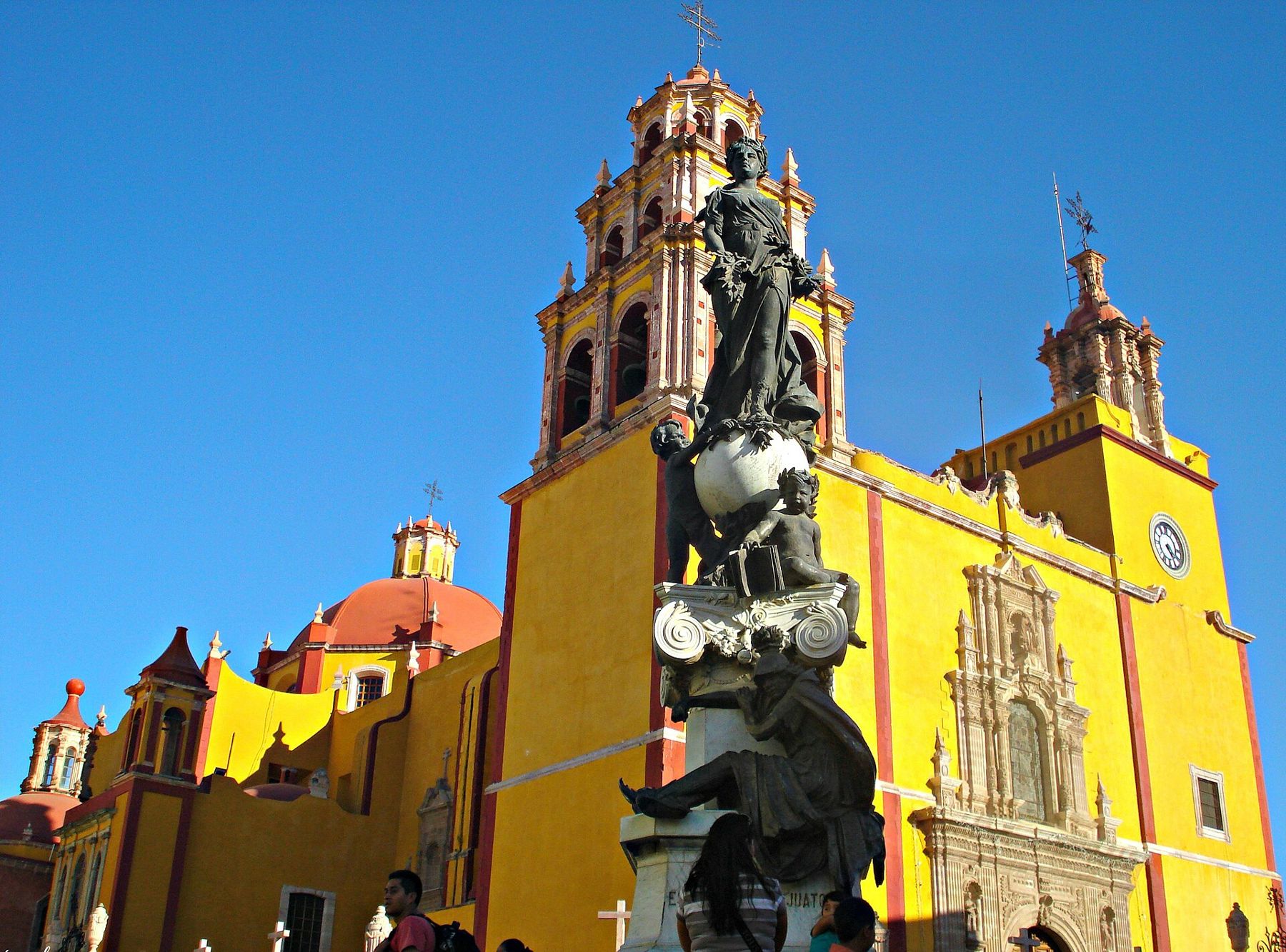
Walk west from the Jardín de la Unión along the main street and within minutes the town opens out into a sloping, irregular plaza. On one side, a church painted a deep, glowing yellow; in the middle, a bronze figure on a tall column; around the edges, old mansions with iron balconies. This is the Plaza de la Paz, and from here a short climb leads to one of the most striking buildings in Guanajuato, the white main building of the university, reached by a long flight of stone steps.
Plaza de la Paz
Unlike the Jardín de la Unión, the Plaza de la Paz is open to the sky. It slopes, it is paved in stone, and it is framed by some of the grandest colonial and nineteenth-century houses in the city, built for families made rich by the mines. Several now house public offices. Iron balconies, carved stone door frames and tall shuttered windows line the walls.
In the centre stands a monument that shares the square's name, a bronze figure of Peace on a high pedestal, with smaller figures gathered around its base. It is a fine place to orient yourself: the basilica on one side, the streets toward the university on the other, and the main thoroughfare running past.
The yellow basilica
The Basilica of Our Lady of Guanajuato, the Basílica de Nuestra Señora de Guanajuato, is hard to miss. Its walls are a bright, saturated yellow trimmed with deep red, and against a blue sky the colours seem almost to vibrate. The main tower rises in stacked tiers of arches and pinnacles, the dome behind it is tiled in red, and the main doorway is framed by a richly carved stone portal in a darker, warmer stone.
The church dates from the late seventeenth century, when the city's silver wealth paid for ambitious buildings. Inside, the space is high and ornate, with gilded altarpieces and chandeliers. The focus is the venerated image of the Virgin, Nuestra Señora de Guanajuato, the city's patron. Tradition holds that the image is very old and was sent from Spain in the sixteenth century as a royal gift; the details are part of the city's lore, and the image is honoured with great devotion either way.
The basilica is an active place of worship. Dress modestly, keep your voice down, and avoid walking about during services. Mass times and opening hours vary, so check locally before planning a visit around them.
Up to the university
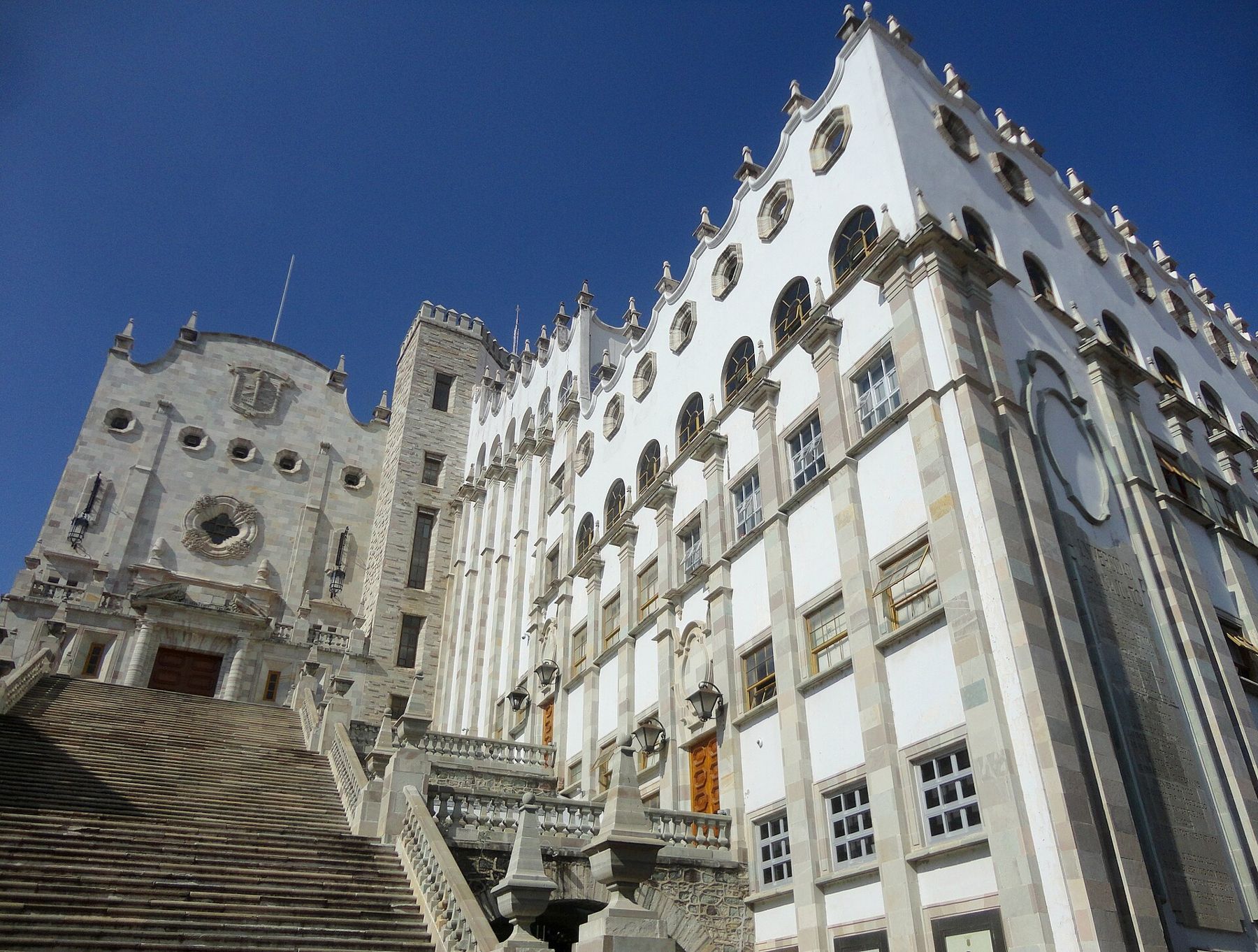
From the plaza, a short walk along a narrow street brings you to the foot of the University of Guanajuato's main building. You see the stairway first: a long, straight flight of grey stone steps rising between balustrades, so long and steep that the doors at the top seem to float above you.
The building itself is a surprise in a city of colonial churches. Built in the mid-twentieth century, it has a tall white façade studded with octagonal windows, scalloped rooflines and stone pinnacles, with a crenellated tower beside it. It looks a little like a castle and a little like a cathedral, and its style is deliberately grand, a modern building dressed in older forms. Seen from the bottom of the steps, it fills the sky.
Like many places in the old town, the streets around it carry names that tell their own small stories.
The stairway
The steps are the main event. There are more than a hundred of them, and at around 2,000 metres every one counts. Take them slowly, pause on the landings, and look back. From partway up, the view opens over the rooftops of the old town, with church domes, towers and the hillsides beyond.
The stairway is also a favourite meeting place. Students sit on the steps between classes, couples take photographs, and in festival season the steps can become seating for performances. The university is a working institution, so be respectful of classes and of the people who use the building every day. Access to the interior may be limited; check what is open when you visit.
Beside the university stands the Templo de la Compañía de Jesús, the Jesuit church, with its own ornate stone façade. It is worth stepping in to compare its baroque carving with the clean white lines of the university next door.
The university in the city
The University of Guanajuato is spread through the old town rather than gathered on one campus. Its faculties, libraries and offices occupy old houses and newer buildings along many of the central streets. You will pass them without realising: a carved doorway with a small plaque, a courtyard full of students, a balcony with potted plants.
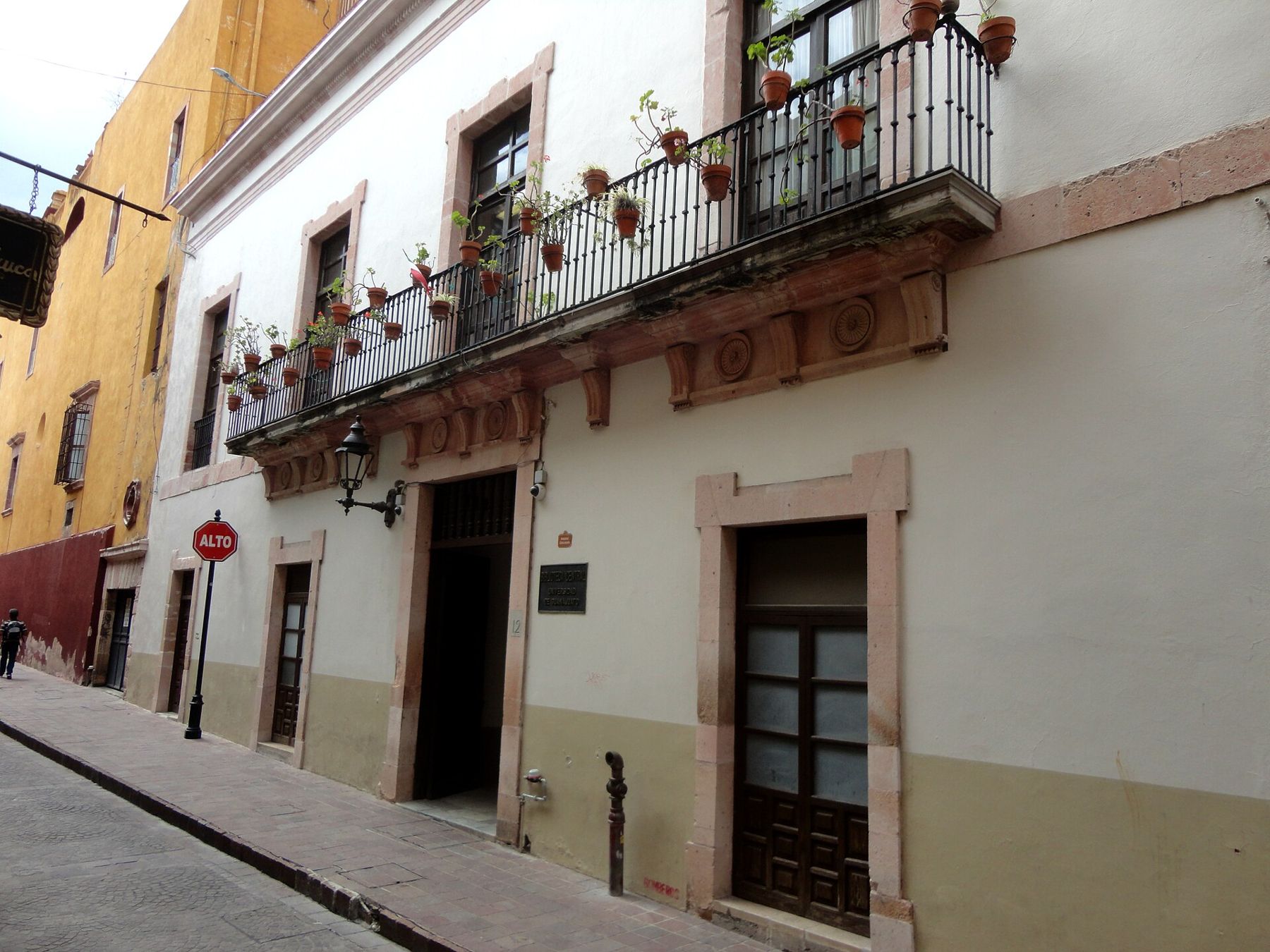
One of these is the central library, housed in a former mansion with a long iron balcony crowded with flowerpots and a stone-framed doorway. Buildings like this are part of what keeps the old town alive: young people, books, music and conversation, in streets that might otherwise belong only to visitors. The student culture also gives the city its famous walking serenades and plays a big part in the Festival Internacional Cervantino.
Putting the walk together
A good route starts at the Jardín de la Unión, follows the main street west to the Plaza de la Paz, takes in the basilica, and then climbs to the university. From there, the alleys continue uphill or drop back down toward the markets and the Alhóndiga.
Late afternoon is often the best time. The yellow of the basilica glows in the low sun, the university steps catch the warm light, and the plazas fill with people heading out for the evening. Bring water, take the climb at your own pace, and leave time simply to sit and watch the city go by.