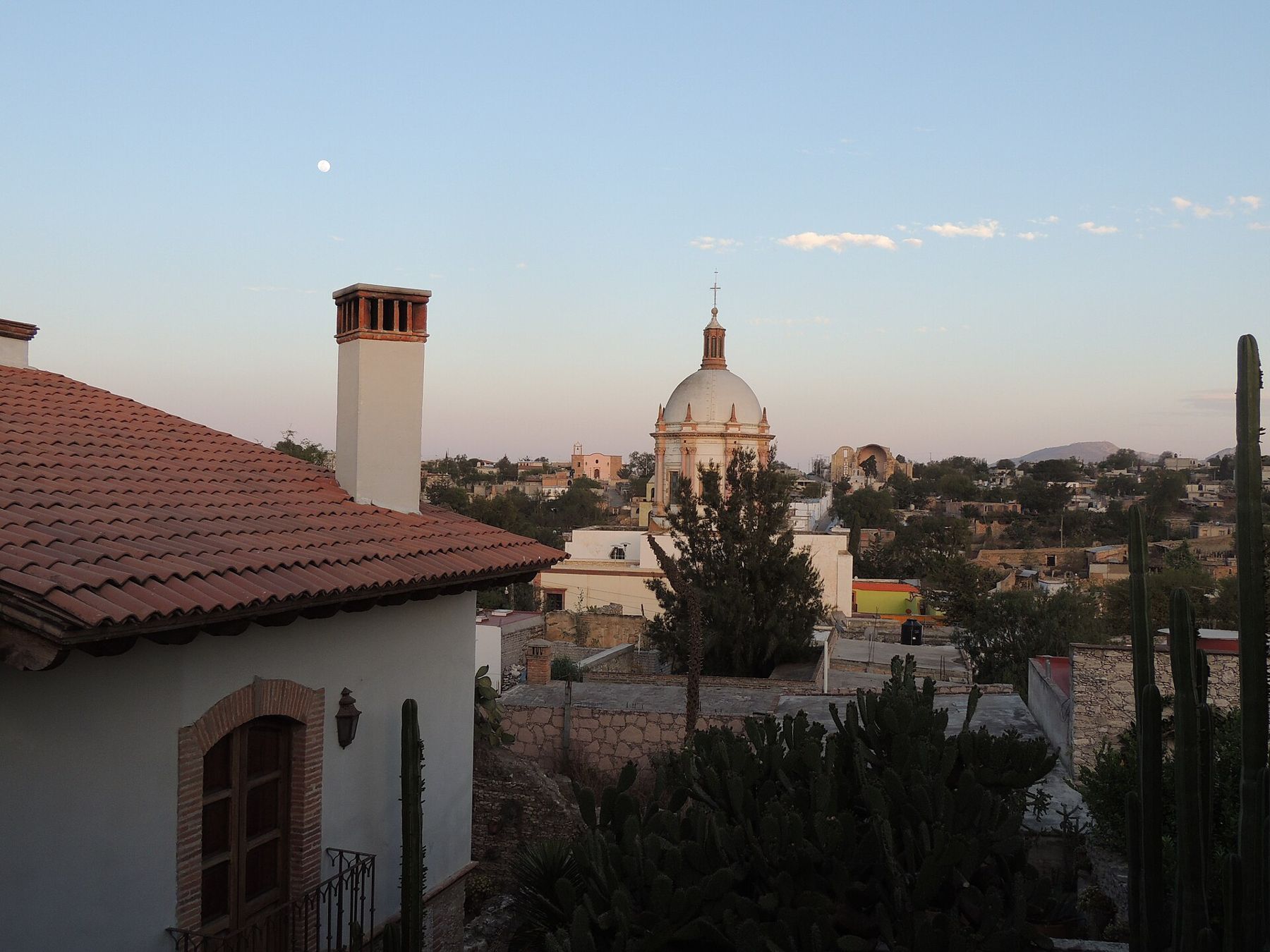
Guanajuato city is all ravine and alley, every street pressed between steep walls. Mineral de Pozos is the opposite. It lies in the north of Guanajuato state, near San Luis de la Paz, on high, dry, open land, and what you see there is space: wide skies, dusty tracks, roofless stone buildings with their arches standing against the blue. It is a mining town too, and its story is the other face of the silver that built the capital.
This is a day trip, and a long one. It suits anyone who has walked the capital's callejones and wants to see what a mining town looks like when the mines stop.
A boom and an emptying
Mining at Pozos goes back to the colonial period, but the town's great boom came later, in the late nineteenth and early twentieth centuries, when new companies and new machinery opened up its silver and other metals. Haciendas de beneficio, the works where ore was crushed and refined, went up around the town, with their patios, tanks and furnaces.
Then the boom ended. Troubled times after the Mexican Revolution, falling metal prices and flooded workings left the mines idle, and much of the population drifted away. Whole complexes were abandoned and their roofs fell in. Today the town is semi-abandoned rather than empty: people live and work here, the plaza has life, and the church still holds services, but ruins sit at every edge of town and out in the scrub beyond.
The roofless haciendas
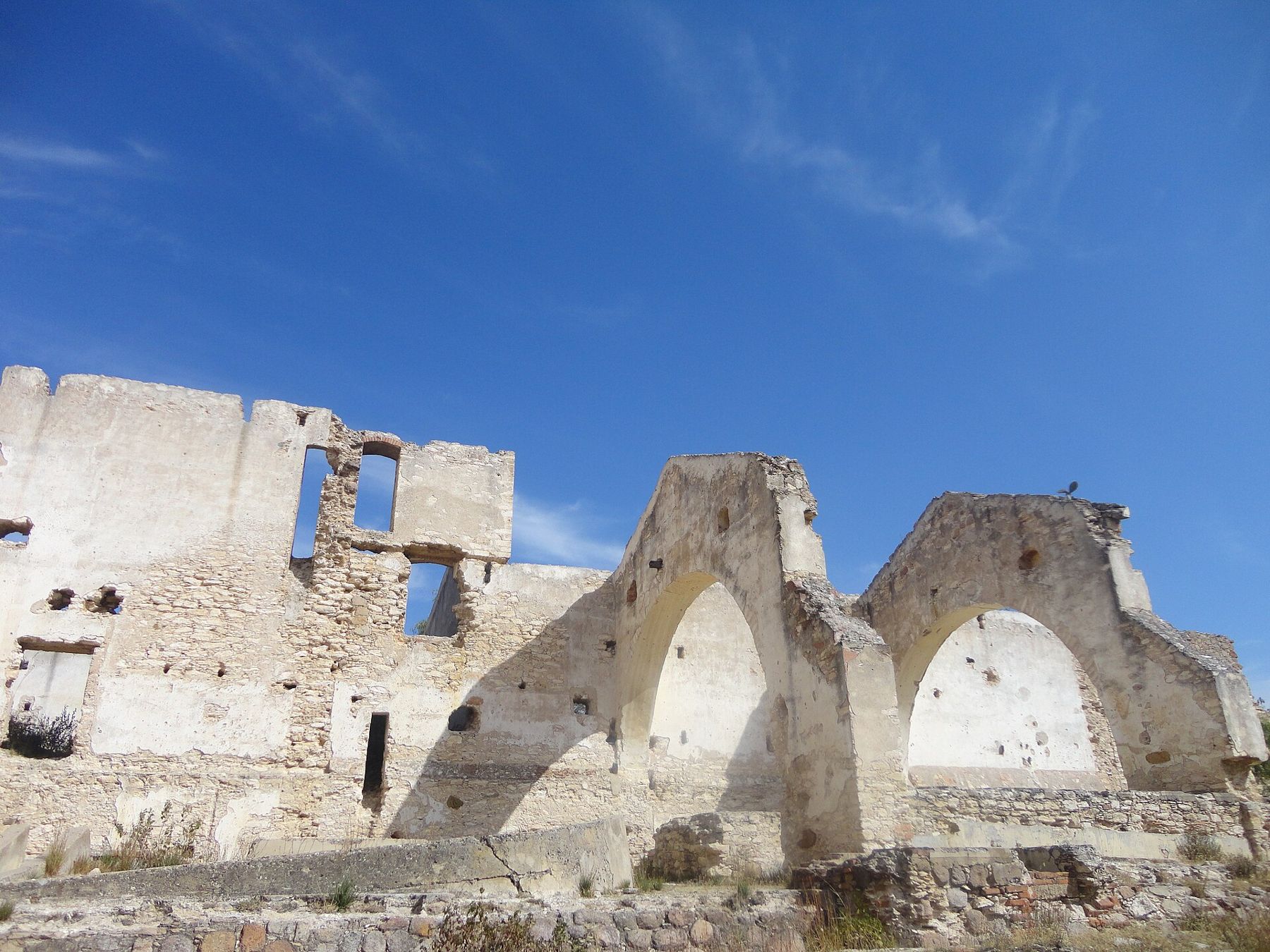
The ruins are the reason most people come. Walls of pale stone and lime plaster stand two or three storeys high with nothing behind their windows but sky. Rows of round-headed openings trimmed in red brick run along long facades. Great pointed arches, built to carry roofs that are long gone, now frame nothing at all, and their shadows swing across the dusty yards as the sun moves.
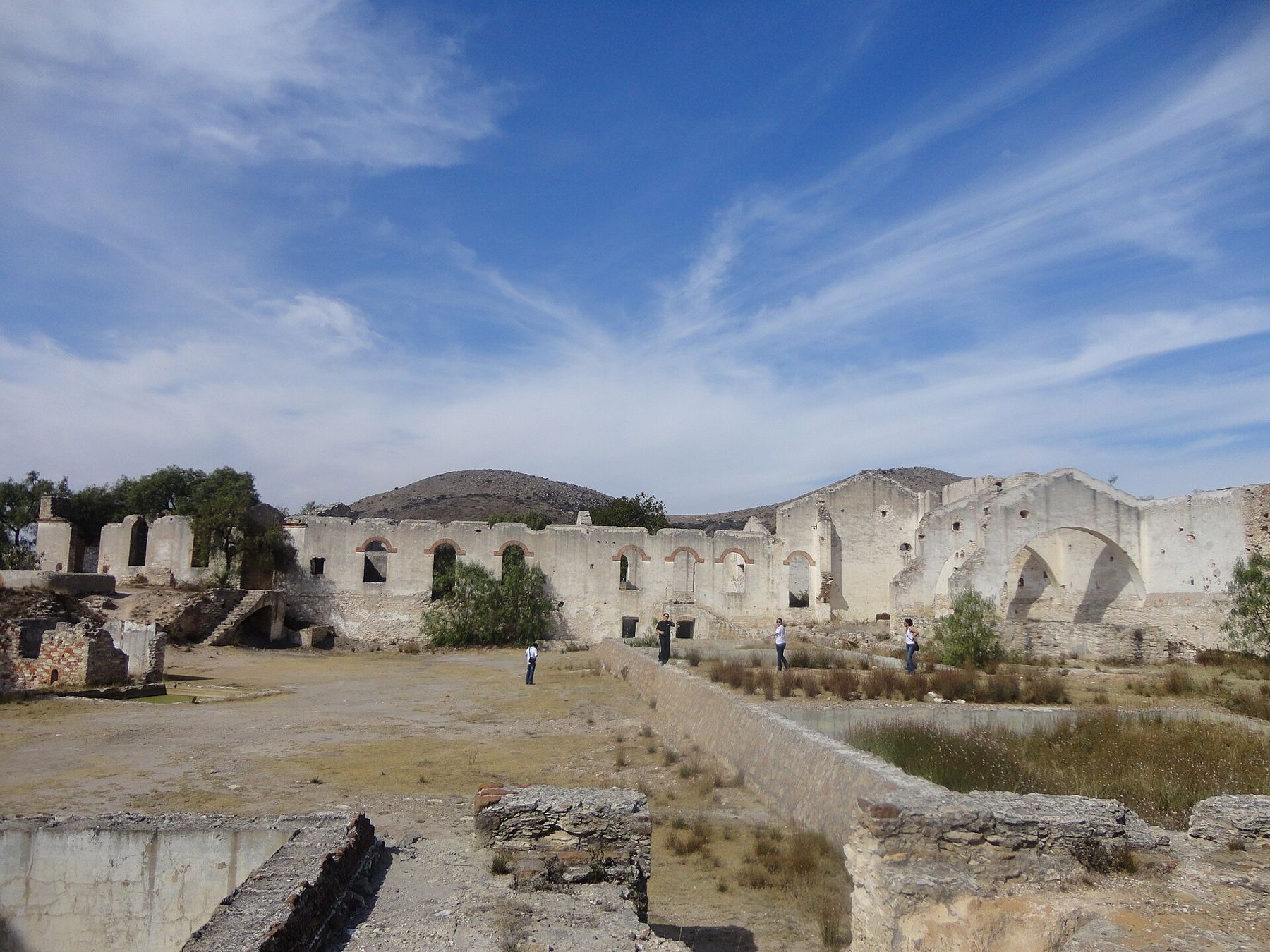
Walking among them, you can still read how the works functioned: the stone tanks and channels where ore was washed, the stairs climbing to upper levels, the furnaces and storerooms. Grass and shrubs grow in the patios, and the only sounds are wind, birds and your own footsteps on gravel. Some sites are open ground; others are fenced or reached through a gate, and conditions change, so take local advice on where you may walk.
Be careful. These are ruins, not restored monuments. Walls can be unstable, floors may hide drops, and old shafts may be close to paths. Keep to obvious tracks, keep children close, and do not climb on the masonry.
Santa Brígida and the chimneys
Of all the ruins, Santa Brígida is the one people remember. Its tall stone chimneys, pyramidal and slightly tapering, rise from the scrub like markers on the plain, and they are among the oldest mining structures around Pozos. Seen from a distance, with nothing else for scale, they look almost ceremonial. Up close, the stonework is rough and patient, laid by hand block by block.
Other mine sites spread around the town, each with its own chimneys, walls and arches; you can spend a morning simply moving from one to the next. The light is best early and late, when the stone turns gold and the long shadows give the walls their shape.
If you have already seen the mine and church at La Valenciana, the contrast is striking. There, silver paid for gilded altars that still glow; here, the works were left to the weather, and you see the bones of mining without the ornament.
The town itself
Between the ruins, the town has a small centre with a plaza, a parish church dedicated to San Pedro whose white dome you see from far away, and quiet streets of flat-roofed houses, stone walls and cactus gardens. Some old buildings have been restored and painted; others stand empty beside them. The town has been recognised as one of Mexico's Pueblos Mágicos, and it draws visitors on weekends, but on a weekday it can feel very still.
The place also has a musical side: pre-Hispanic and traditional instruments are made and played here, and you may hear drums or flutes drifting across a courtyard. Festivals bring the streets to life at certain times of year; dates vary, so check ahead if you want to see one.
Getting there and planning the day
Pozos is a long way from the capital by road, with the drive taking a good part of the morning each way, so treat it as a full day out. Most people go by car or with an organised trip; public transport is possible but slower and involves changes, usually through San Luis de la Paz. Routes and timetables change, so check before you go.
- Start early, to walk the ruins in the cool and soft light.
- Carry plenty of water and sun protection: the land is high, dry and exposed.
- Bring a warm layer; mornings and evenings are cold at this height.
- Wear closed shoes with grip for gravel, dust and broken stone.
- Check whether particular sites are open, and any entry fees, before you rely on them.
When to go
The dry season, roughly from autumn into spring, brings the clearest skies and the most comfortable walking, though nights can be cold. Spring afternoons get hot and dusty. The rainy months turn the scrub green and can make dirt tracks muddy. For the year's broader pattern of seasons and festivals in the region, see Guanajuato through the year.
Back in the capital that evening, the crowded alleys feel different after a day in Pozos. The silver that filled Guanajuato's churches came from mines like these, and in the north of the state you have seen what was left when it ran out.