In most cities, the streets come first and the houses follow them. In Guanajuato it feels the other way round. The town grew in a narrow ravine, and as the houses crept up the slopes on either side, the ways between them had to squeeze in wherever they fit. The result is the callejón: a lane, often just wide enough for two people to pass, that climbs, bends, breaks into stairs, and opens without warning onto a tiny plaza or a view across the valley.
There are hundreds of them. Some have names everyone knows; most are simply the way home for the people who live along them. Walking them is the best way to understand the city, and it asks only a little patience and a good pair of shoes.
What makes a callejón
A callejón is a lane, and in Guanajuato that usually means a lane on a slope. Many start as a level passage off a street in the centre and then tilt upward within a few metres. Steps appear, sometimes regular and sometimes not, laid in stone and worn smooth in the middle. Walls rise close on both sides, painted in strong colours: ochre, terracotta, blue, pink, green. Iron balconies jut out overhead, and in the narrowest lanes they come so close that neighbours could almost reach across.
Cars are kept out of most of them, and in many cases they simply would not fit. That is what gives the lanes their sound. Instead of traffic you hear footsteps, a radio through an open window, a dog on a roof, someone sweeping a doorstep, and bells from a church you cannot see. The famous Callejón del Beso is the extreme case, with balconies so close the lane takes its name from a legend about them, but the same squeeze shapes dozens of lanes around it.
Reading the signs
At the corners, look up for the name plates. Many are set into the wall as painted tiles, with the name of the lane or street in blue or dark lettering on a pale ground, sometimes with a small decoration in the corner. They tell you more than where you are. The word at the start tells you what kind of way you are on: a callejón is an alley, a calle a street, a subida a climb, a bajada a descent, a plaza or plazuela a square.
The names themselves are a mix of saints, trades, local families, events and stories. Some are plain descriptions of the place; others carry legends of their own. You will not decode them all, and nobody expects you to, but stopping to read each plate as you pass slows you down in the right way and helps you remember where you turned.
Getting lost on purpose
The single best piece of advice for the callejones is to stop trying to follow a map too closely. Lanes that look connected on paper turn out to be separated by a wall; a stair that seems to go nowhere opens onto a lane you have already walked from the other side. Phone maps help with the general direction, but they often struggle with stairs and very narrow passages.
So pick a direction, uphill or down, and follow whatever looks interesting. When a lane ends in a door, turn back. When it splits, take the narrower branch. Most climbing lanes in the centre will, sooner or later, bring you to a lookout or to a street that leads back down. Downhill is always the way back to the valley floor, where the main streets, the plazas and the Jardín de la Unión gather everything together again.
If you would rather have someone else lead, the evening sung walks through the lanes take the same streets with music.Stairs, slopes and altitude
Guanajuato sits at about 2,000 metres. That is high enough that a long stair can leave you breathless even if you walk a lot at home. Go slowly, stop on the landings, and drink water. The sun is strong at this altitude, and the steeper lanes on the open hillsides have little shade around midday.
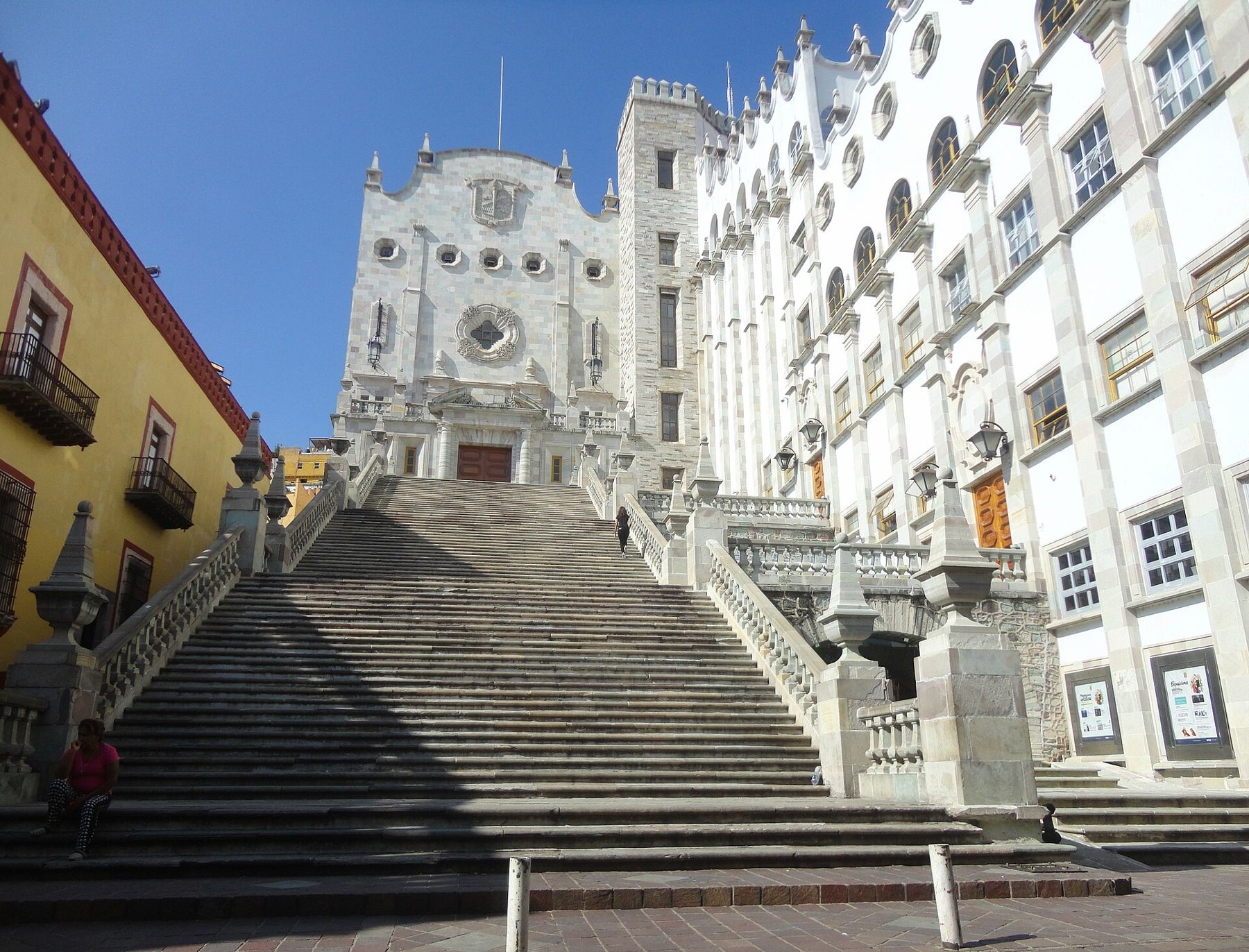
The stairs themselves vary. Some are broad and grand, like the great flight in front of the University of Guanajuato, laid out for ceremony as much as for climbing. Others are a series of uneven stone treads, some tall, some shallow, some sloping. Wear shoes with grip, especially after rain, when worn stone becomes slippery, and watch your step on the way down, which is when most people stumble.
Where the lanes run out
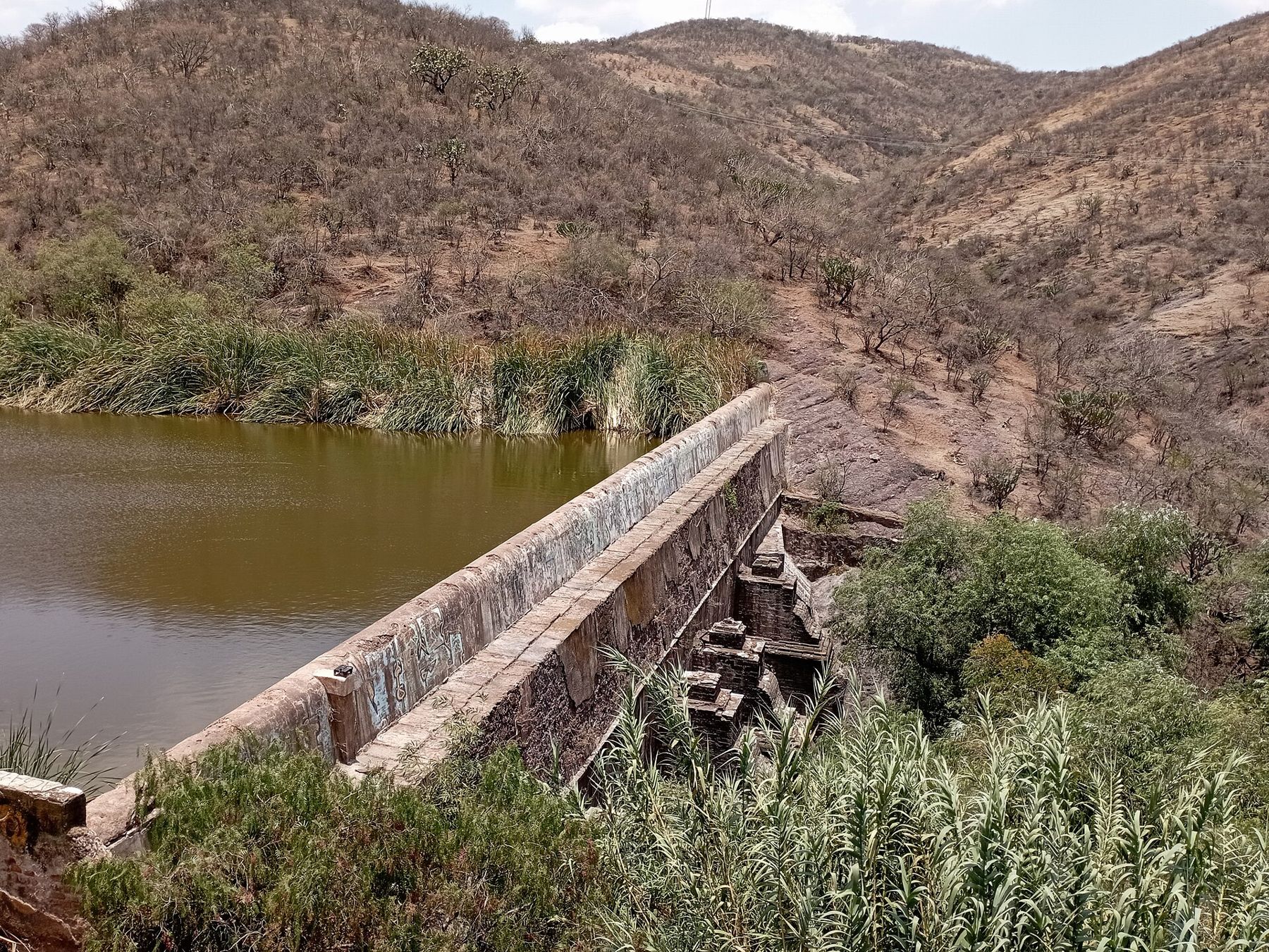
Climb far enough on any side and the houses thin out, the paint gives way to bare walls, and the lanes become dirt paths onto the hills. Up here the land is dry scrub and rock for much of the year, and you start to see how the town has always depended on stored water. Above the upper end of the city, old stone dams such as the Presa de Pozuelos hold reservoirs in the folds of the hills, part of the same long effort to manage water that shaped the river that went underground.
These edges are quieter and less visited than the centre. Go in daylight, go with company if you can, and turn back where paths become unclear. The view back over the rooftops is often the best reason to have come.
A few habits that help
- Walk in the morning, when the light is soft, the lanes are cool and the city is getting on with its day.
- Keep your voice down near houses. These are homes, not a stage set, and sound carries along the walls.
- Step aside on stairs for people carrying shopping, gas cylinders or children; they are on their way somewhere.
- Do not photograph people in their doorways without asking.
- After dark, stay with the busier, lit lanes in the centre. As anywhere, keep valuables out of sight.
- If you want a fixed point to aim for, the hilltop monument of El Pípila is visible from much of the centre.
Above all, give the lanes time. A callejón seen at a run is just a narrow passage. Walked slowly, with stops to read a tile, catch a view or let someone pass, it is the city at its most itself.