Every alley in Guanajuato leads, sooner or later, to silver. The colour of the houses, the size of the churches, the theatre and the plazas all go back to what came out of the hills, and the place where that story is easiest to read is La Valenciana, a few kilometres north of the centre and well above it. Here a mine and a church stand side by side: one dug the wealth out of the ground, the other spent a great deal of it on carved stone and gold leaf.
The trip is short, the climb is real, and the contrast is the point. Outside, rough stone walls, a dusty patio and an old headframe; a few steps away, a nave so dense with gilded carving that your eyes take a minute to settle.
The mine that made the city rich
Silver had been worked around Guanajuato since the sixteenth century, but La Valenciana belongs to the eighteenth. The mine was opened in the second half of that century, and for a time it was counted among the richest silver producers anywhere in the world. Its output paid for mansions in the valley below, for churches across the city, and for a title of nobility for the family that held it. When people describe Guanajuato as a city built on silver, this hillside is much of what they mean.
Mining here meant shafts sunk deep into the rock, galleries running off them, and a constant battle with water and ventilation. Ore came up by hoist, powered for generations by animals turning great wooden drums, and was carried down to be crushed and refined. The work was dangerous and the labour hard, and it is worth holding both halves of the story in mind as you look around: the splendour of the church and the conditions in the galleries come from the same rock.
The city and its mines together form a UNESCO World Heritage site, and La Valenciana is one of the clearest places to see why the two were listed as one. If you want the wider picture of the valley's silver and how it shaped the streets, the walk up to El Pípila gives you the whole bowl of the city in a single view, with the mining hills rising behind it.
The patio, the headframe and the shaft
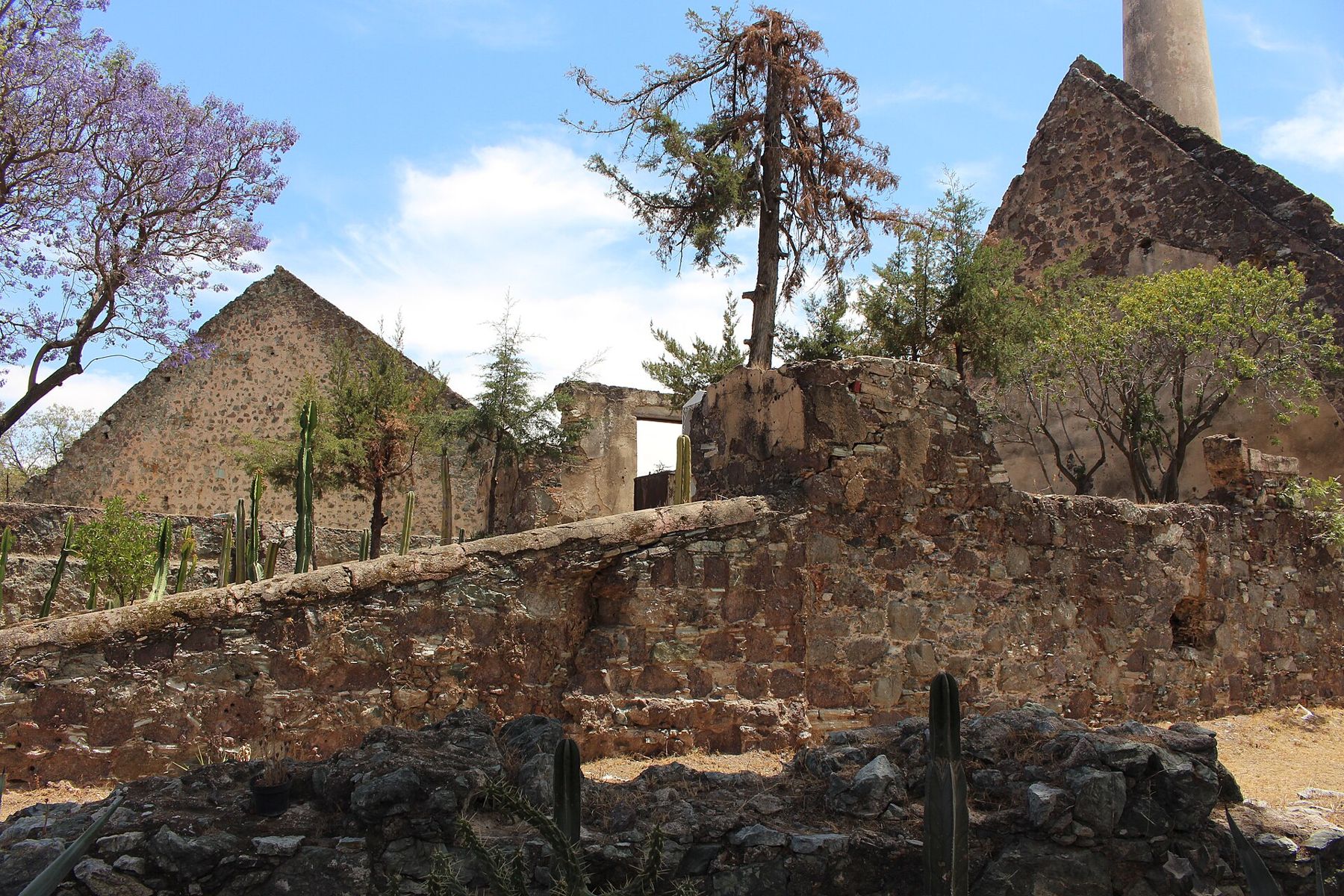
The mine buildings sit in a walled yard of brown and grey stone, softened by cactus, jacaranda and pine. The walls are built up in tall triangular gables, and a common local telling says they were shaped to echo the points of the Spanish crown; take that as tradition rather than record, but it is easy to see the jagged outline against the sky. A tall round chimney rises behind the ruins, and the whole yard has the dry, warm smell of sun on old masonry.
Part of the mine can usually be visited. Depending on what is open when you go, that may mean looking down a shaft from the surface or descending a stretch of steep steps into a gallery with a guide. The descent is narrow, damp and cool, and not for anyone uneasy in tight spaces or on uneven stairs. Access, hours and fees change, so check locally before you set out, and wear shoes with grip.
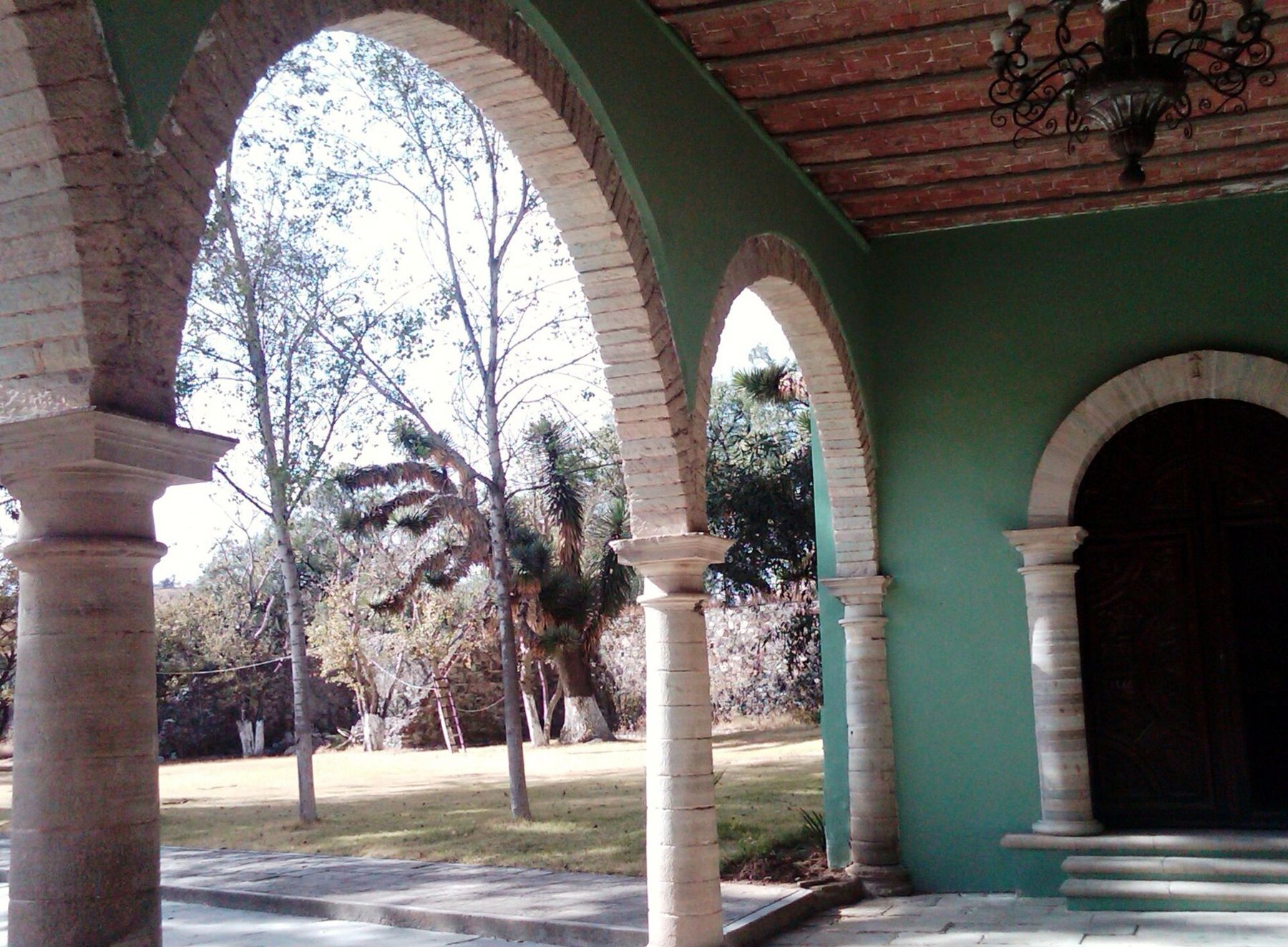
Away from the shaft, the old administration buildings show another side of the mine: arcades of pale stone columns, green-painted walls, brick vaulted ceilings and heavy wooden doors, opening onto a garden of dry grass and yuccas. It is a quiet place to sit for a moment before the church.
San Cayetano, a church paid for in silver
A short walk from the mine stands the Templo de San Cayetano, usually called simply La Valenciana. It was built in the late eighteenth century with money from the mine, and it is one of the finest examples of the churrigueresque style in Mexico: the exuberant late Baroque in which columns dissolve into carved pilasters and every surface seems to move.
Outside, the facade is worked in pinkish stone, crowded with saints, scrolls and niches, and it reads best in the low light of morning or late afternoon, when the carving throws deep shadows. One tower stands; the second was never finished, which leaves the front pleasingly lopsided. Step back across the small plaza to take it all in, then turn round, because the view down over the valley is half the reason to be here.
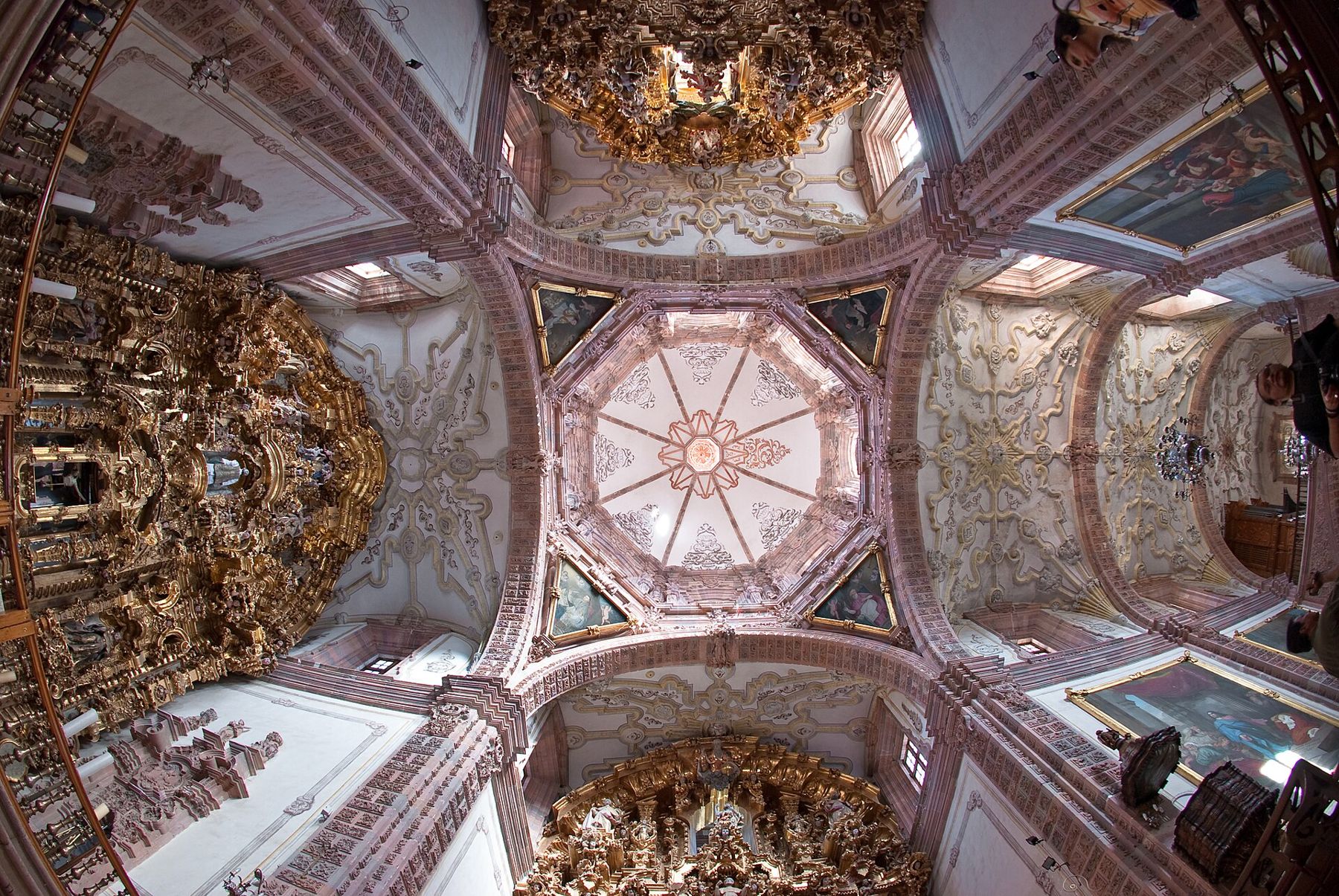
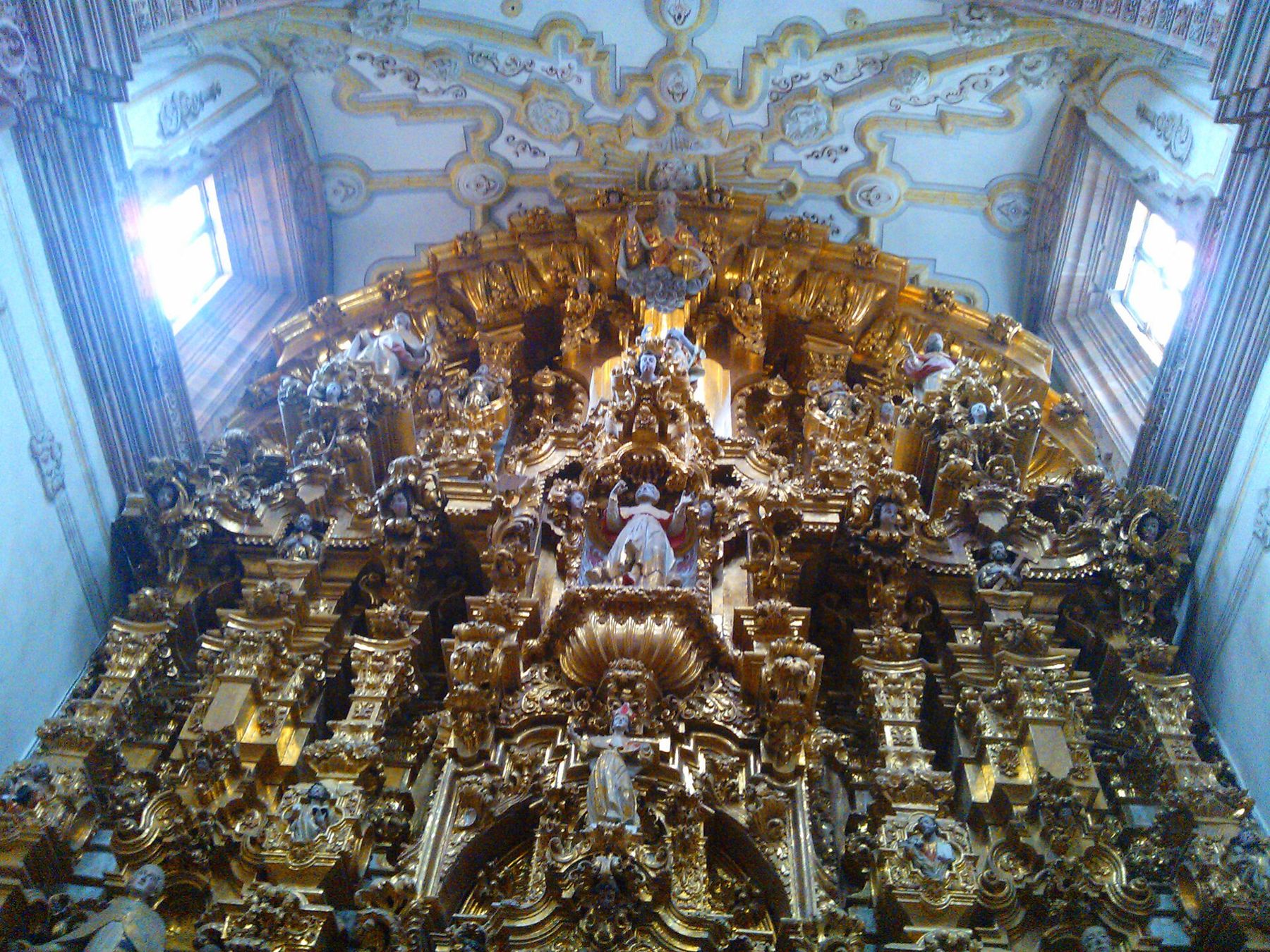
Inside, the church opens into a cross shape under a dome, and three great altarpieces fill the main walls, carved in wood and covered in gold leaf. They rise almost to the vault, layered with figures of saints, angels, shells and clouds, so densely that the eye keeps finding new details: a hand raised in blessing, a face peering out of a scroll, a sunburst behind a niche. The walls between them are pale pink stone and white plaster, and the contrast makes the gold seem even warmer.
Look up as well as ahead. The crossing is crowned by an octagonal dome whose ribs of pink stone meet around a small lantern, with white plaster panels between them carved in delicate scrolls. Pendentives at the corners hold painted scenes. The geometry is calm where the altars are wild, and the two together are the whole style in one glance.
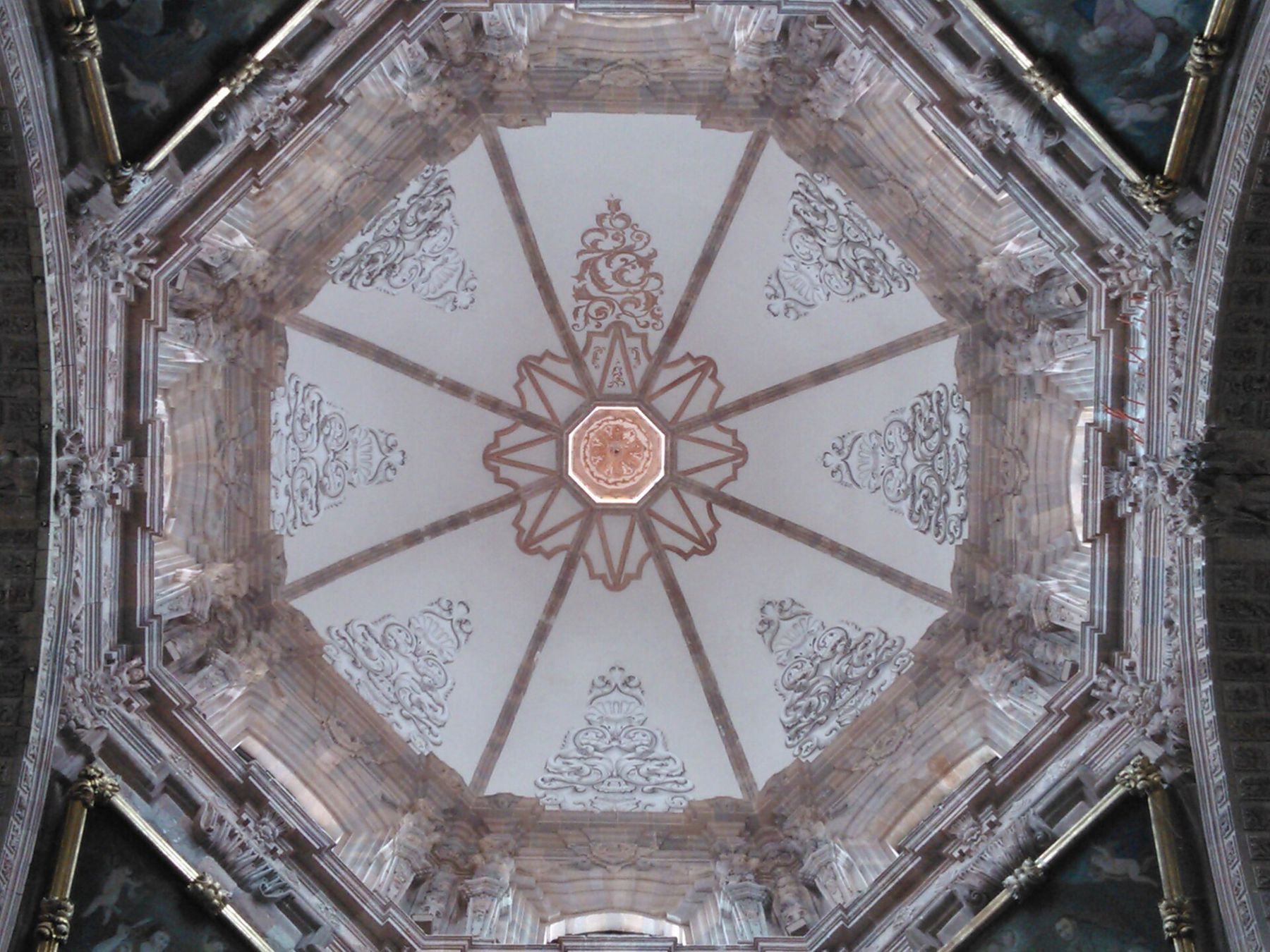
This is a working church. Masses are held here, and visitors are asked to keep quiet, cover shoulders, and leave the nave to worshippers during services. Photography rules can vary; follow what is posted at the door.
Here a mine and a church stand side by side: one dug the wealth out of the ground, the other spent a great deal of it on carved stone and gold leaf.
Getting up the hill
La Valenciana sits on the road that climbs out of Guanajuato toward the north, and most visitors arrive by local bus from the centre or by taxi. The ride is short and winding, with the city falling away below. Routes and stops change, so ask where buses for Valenciana leave from on the day.
Some people walk, at least one way. The road is steep and has traffic, with stretches where pavement is narrow or missing, so if you go on foot keep to the edge, go in daylight, and consider walking down rather than up. The thin air at this height, around and above two thousand metres, makes uphill work tiring even for fit walkers. On the way back into town, the streets near the Mercado Hidalgo are a natural place to land.
When to go
Mornings are the best time: cooler for the climb, softer light on the facade, and fewer groups in the church. The dry months from autumn to spring give clear skies; in the rainy season, afternoon storms can roll in quickly, so go early. Nights are cool all year at this altitude, and the mine galleries are cool at any hour, so carry a layer.
Putting the visit together
Allow a couple of hours for the mine, the church and the view, more if you go underground or linger in the nave. Many people pair La Valenciana with the road tunnels under the city, which echo the mining galleries in their rough-cut stone, or with the walk through the Jardín de la Unión on the way back, where the theatre and the churches below were raised on the same silver.
- Check opening hours and fees for both the mine and the church before you set out; both change.
- Wear shoes with grip for the steps and stone floors.
- Bring water, sun protection and a warm layer; the sun is strong at altitude and the galleries are cool.
- Keep valuables close on buses and in crowds, as you would anywhere busy.
Coming back down into the valley, the city looks different. The domes, the painted facades and the steep stairways all seem to lead back up the hill to where the silver came from, and to the gold that still glows in the dark nave of San Cayetano.